India’s tax system changed completely from April 1, 2026. The old Income Tax Act 1961 is replaced by the Income-tax Act, 2025 (ITA 2025). New slabs, new section numbers, higher allowances — this guide covers everything salaried Indians need to know for FY 2026-27.
Source: Income-tax Act 2025, Finance Bill 2026, Income Tax Rules 2026, verified via official government documents from finmin.nic.in and incometax.gov.in
What Changed — ITA 2025 vs Old Act 1961
| Feature | Old ITA 1961 | New ITA 2025 |
|---|---|---|
| Effective from | 1961 | April 1, 2026 |
| Assessment Year | Separate concept | Replaced by “Tax Year” |
| Section 80C | Section 80C | Section 123 |
| Home loan interest | Section 24(b) | Section 22 |
| NPS deduction | Section 80CCD(1B) | Section 124(3) |
| Language | Complex legal | Simplified |
| PAN | Continues unchanged | Continues unchanged |
Important: All existing rights, pending proceedings, and PAN cards remain valid. Only the law’s language and structure changed — not your obligations.
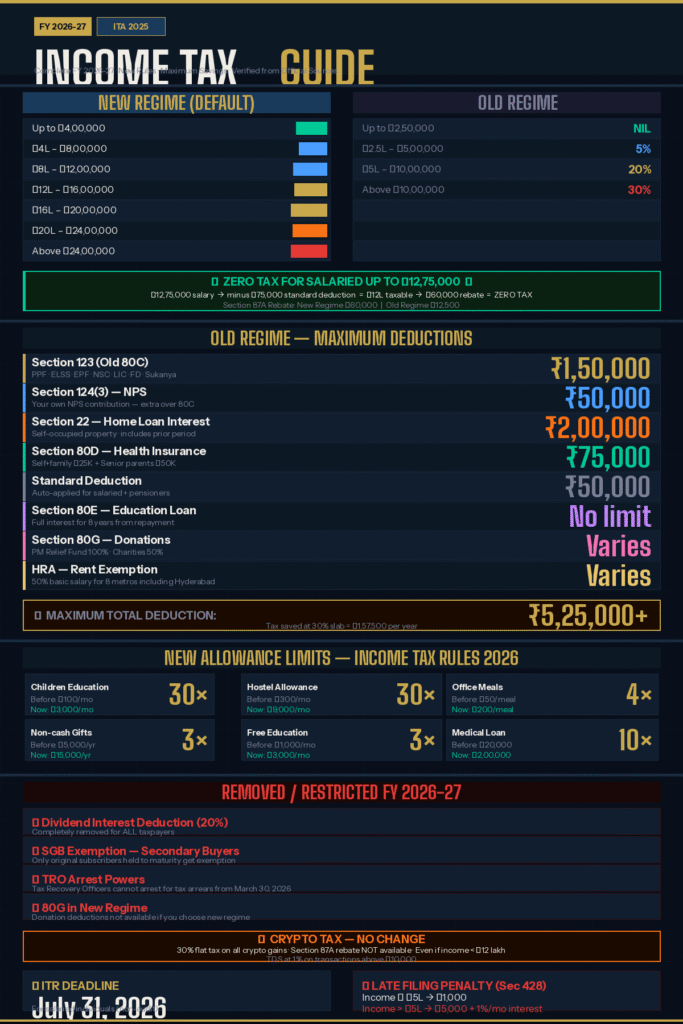
Income Tax Slabs FY 2026-27
New Tax Regime — Default (ITA 2025 Section 202)
| Income Range | Tax Rate |
|---|---|
| Up to ₹4,00,000 | Nil |
| ₹4,00,001 – ₹8,00,000 | 5% |
| ₹8,00,001 – ₹12,00,000 | 10% |
| ₹12,00,001 – ₹16,00,000 | 15% |
| ₹16,00,001 – ₹20,00,000 | 20% |
| ₹20,00,001 – ₹24,00,000 | 25% |
| Above ₹24,00,000 | 30% |
Plus 4% Health and Education Cess on tax amount.
Surcharge (New Regime):
- Income ₹50L – ₹1Cr: 5%
- Income ₹1Cr – ₹2Cr: 15%
- Income above ₹2Cr: 25%
Note: The 37% surcharge rate applies only to old regime. New regime maximum surcharge = 25%.
Old Tax Regime (Must actively select)
| Income Range | Tax Rate |
|---|---|
| Up to ₹2,50,000 | Nil |
| ₹2,50,001 – ₹5,00,000 | 5% |
| ₹5,00,001 – ₹10,00,000 | 20% |
| Above ₹10,00,000 | 30% |
Section 87A Rebate — Zero Tax Explained
| Feature | New Regime | Old Regime |
|---|---|---|
| Zero tax up to | ₹12,00,000 | ₹5,00,000 |
| Maximum rebate | ₹60,000 | ₹12,500 |
| Standard deduction | ₹75,000 | ₹50,000 |
| Effective zero-tax salary | ₹12,75,000 | ₹5,50,000 |
How it works (New Regime example):
- Gross salary: ₹12,75,000
- Minus standard deduction: ₹75,000
- Taxable income: ₹12,00,000
- Tax on slabs: ₹60,000
- Minus 87A rebate: ₹60,000
- Final tax payable: ZERO
Important: Section 87A rebate does NOT apply to special rate income like crypto gains, capital gains, or online gaming winnings — even if total income is below ₹12 lakh.
New Regime — What’s Available
| Deduction | Limit | Available? |
|---|---|---|
| Standard Deduction (salaried + pensioners) | ₹75,000 | ✅ Yes |
| Section 87A Rebate | ₹60,000 | ✅ Yes |
| Employer NPS Contribution | No limit | ✅ Yes |
| Section 123 (80C investments) | ₹1,50,000 | ❌ No |
| HRA | Depends | ❌ No |
| Home loan interest | ₹2,00,000 | ❌ No |
| 80D Health insurance | ₹75,000 | ❌ No |
| 80G Donations | Varies | ❌ No |
| Your own NPS contribution | ₹50,000 | ❌ No |
Key point: Standard deduction of ₹75,000 available for both salaried employees AND pensioners in new regime.
Old Regime — Complete Deductions Guide
Section 123 (Old 80C) — Up to ₹1,50,000
| Investment | Returns | Lock-in | Risk |
|---|---|---|---|
| PPF | 7.1% p.a. | 15 years | Zero |
| ELSS Mutual Funds ✅ | 12-15% (market) | 3 years | Medium |
| EPF | 8.25% p.a. | Till retirement | Zero |
| NSC | 7.7% p.a. | 5 years | Zero |
| Tax Saver FD | 6.5-7.5% | 5 years | Zero |
| Sukanya Samriddhi | 8.2% p.a. | Till daughter age 21 | Zero |
| Life Insurance Premium | Protection tool | Policy term | Zero |
| Home loan principal repayment | NA | Loan tenure | Zero |
ELSS confirmed eligible under Section 123 of ITA 2025. Aggregate limit remains ₹1,50,000.
Home loan bonus: Principal repayment counts within ₹1,50,000 limit AND interest deduction of ₹2,00,000 claimed separately under Section 22. Both simultaneously allowed.
Section 124(3) — NPS Extra Deduction
- Additional ₹50,000 over and above Section 123 limit
- Your own contribution only (not employer’s)
- Old regime only
- Total with Section 123 + NPS = ₹2,00,000
Section 22 — Home Loan Interest
- Up to ₹2,00,000 for self-occupied property
- Includes prior-period interest
- Old regime only
- Claim simultaneously with principal under Section 123
Section 80D — Health Insurance
- Self + family: ₹25,000
- Senior citizen parents: ₹50,000
- Maximum total: ₹75,000
Section 80E — Education Loan Interest
- Full interest deduction — no upper limit
- 8 years from first repayment year
- Old regime only
Section 80G — Donations
- PM Relief Fund: 100% deduction
- Registered charities: 50% deduction
- Old regime only — NOT available in new regime
Big Allowance Increases — FY 2026-27
Income Tax Rules 2026 massively increased allowance limits. These reduce your taxable salary significantly.
| Allowance | Old Limit | New Limit FY 2026-27 | Change |
|---|---|---|---|
| Children Education | ₹100/month per child | ₹3,000/month per child | 30x increase |
| Hostel Allowance | ₹300/month per child | ₹9,000/month per child | 30x increase |
| Free Meals (office) | ₹50 per meal | ₹200 per meal | 4x increase |
| Non-cash Gifts | ₹5,000/year | ₹15,000/year | 3x increase |
| Free Education | ₹1,000/month | ₹3,000/month | 3x increase |
| Medical Loan | ₹20,000 | ₹2,00,000 | 10x increase |
| Overseas Medical | Income < ₹2 lakh | Income < ₹8 lakh | 4x increase |
Ask your employer HR to restructure your salary to include these allowances — immediate tax saving with zero investment.
HRA — Now 8 Cities Get 50%
50% HRA exemption extended from 4 cities to 8 metro cities:
Mumbai · Delhi · Kolkata · Chennai · Bengaluru · Pune · Hyderabad · Ahmedabad
Great news for Hyderabad residents — 50% HRA exemption now available (was 40% earlier).
HRA deduction = lowest of:
- Actual HRA received from employer
- 50% of basic salary (8 metros) / 40% (other cities)
- Actual rent minus 10% of basic salary
Rules:
- Keep monthly rent receipts
- Provide landlord PAN if annual rent exceeds ₹1 lakh
- Cannot claim HRA if living in own house
What Got Removed FY 2026-27
| Deduction | Status |
|---|---|
| Dividend interest expense (20%) | ❌ Completely removed for all |
| SGB capital gains exemption — secondary buyers | ❌ Removed |
| SGB exemption — original subscribers held to maturity | ✅ Still available |
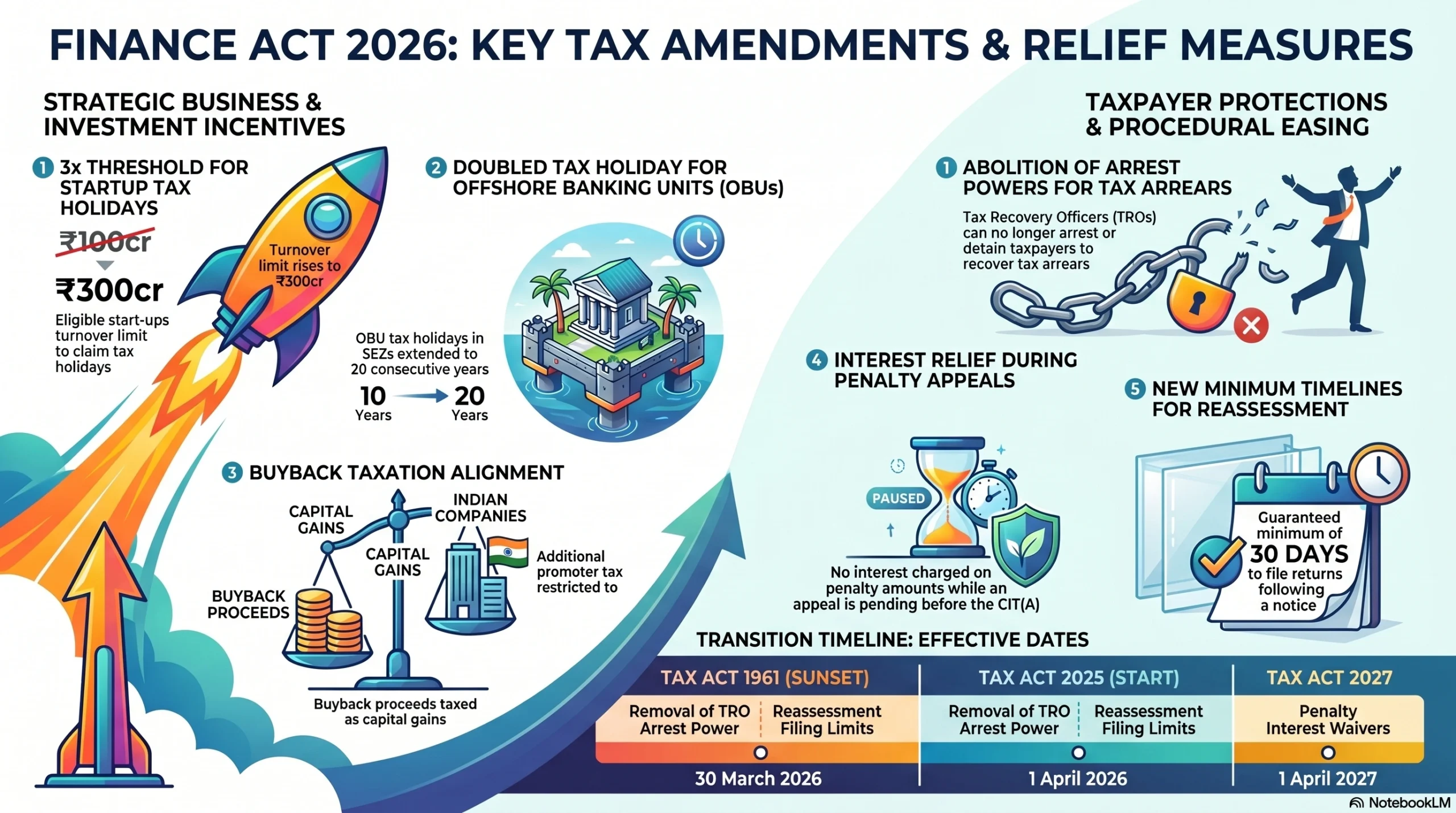
| Arrest powers for tax arrears (TROs) | ❌ Abolished from March 30, 2026 |
Crypto Tax FY 2026-27
No change. Still harsh:
- 30% flat tax on all crypto/digital asset gains
- No deduction allowed except cost of acquisition
- Section 87A rebate NOT available on crypto gains
- Even if total income below ₹12 lakh — crypto tax must be paid
- TDS at 1% on crypto transactions above ₹10,000
Late Filing Penalty — Don’t Miss July 31
ITR deadline: July 31, 2026 for salaried individuals.
Miss it? Pay penalty under Section 428:
| Your Income | Late Filing Fee |
|---|---|
| Up to ₹5,00,000 | ₹1,000 |
| Above ₹5,00,000 | ₹5,000 |
Also: Interest under Section 234A at 1% per month on unpaid tax.
New vs Old Regime — Which Saves More?
Choose New Regime if:
- Gross salary up to ₹12,75,000 — zero tax
- No home loan EMI
- Renting but minimal HRA benefit
- Don’t want investment lock-ins
- Want simple filing in minutes
- Business income taxpayer wanting lower rates
Choose Old Regime if:
- Paying home loan interest ₹2 lakh+
- Paying rent in 8 metros — claiming full HRA
- Maxing Section 123 + NPS = ₹2 lakh deduction
- Health insurance for senior citizen parents
- Making large donations under 80G
- Total deductions exceed ₹3,75,000
Quick Calculator:
Add your deductions:
Section 123 (80C) = max ₹1,50,000
NPS Section 124(3) = max ₹50,000
Home loan interest = max ₹2,00,000
80D health insurance = max ₹75,000
HRA = depends on salary/rent
Standard deduction = ₹50,000

If TOTAL > ₹3,75,000 → Old regime wins
If TOTAL < ₹3,75,000 → New regime wins
Can you switch every year? Yes — salaried individuals can switch between regimes every year at ITR filing time. Business income taxpayers face restrictions.
Maximum Tax Saving — Old Regime
| Section | Deduction | Notes |
|---|---|---|
| Section 123 (80C) | ₹1,50,000 | ELSS, PPF, EPF etc. |
| Section 124(3) NPS | ₹50,000 | Your own contribution |
| Section 22 (Home loan) | ₹2,00,000 | Self-occupied property |
| Section 80D | ₹75,000 | Self + senior parents |
| Standard deduction | ₹50,000 | Auto-applied |
| HRA | Varies | Metro = 50% of basic |
| Section 80E | No limit | Education loan interest |
| Section 80G | Varies | Donations |
| Total possible | ₹5,25,000+ | Excluding HRA and 80E |
Tax saved on ₹5,25,000 deduction at 30% slab = ₹1,57,500 saved per year.
How to File ITR FY 2026-27
- Visit incometax.gov.in
- Login with PAN
- Select Tax Year 2026-27
- Choose ITR-1 (salaried, income under ₹50 lakh)
- Verify pre-filled data — salary, TDS, Form 26AS
- Add deductions if choosing old regime
- Portal automatically shows tax under both regimes — compare
- Pay remaining tax via challan if any
- E-verify using Aadhaar OTP within 30 days
- Save ITR-V acknowledgement
Deadline: July 31, 2026
Tax Saving Checklist FY 2026-27
- Calculate tax under both regimes — use IT portal’s comparison tool
- Declare regime choice to employer by April 2026
- Invest ₹1,50,000 in ELSS/PPF before March 31, 2027
- Open NPS Tier 1 — extra ₹50,000 deduction
- Buy health insurance for parents — claim 80D
- Submit rent receipts to employer — claim HRA
- Ask HR about children education allowance — now ₹3,000/month
- Ask HR about meal allowance — now ₹200/meal
- Keep donation receipts for 80G
- Submit all investment proofs to employer by February 2027
- File ITR before July 31, 2026
Frequently Asked Questions
Q: Is zero tax really possible on ₹12.75 lakh salary? A: Yes. Under new regime, standard deduction of ₹75,000 reduces taxable income to ₹12,00,000. Section 87A rebate of ₹60,000 equals the tax liability on ₹12 lakh. Result = zero tax payable.
Q: Can I claim 80C investments if I’m in new regime? A: No. Switching to new regime means existing PPF, ELSS, LIC investments remain valid assets — but you cannot claim them as tax deductions. Your money stays safe, just no tax benefit.
Q: I’m a pensioner. Do I get ₹75,000 standard deduction? A: Yes. Standard deduction of ₹75,000 is available to both salaried employees and pensioners under new regime.
Q: What if I miss ITR deadline of July 31? A: You can file belated return until December 31, 2026 with penalty of ₹1,000 (income ≤ ₹5L) or ₹5,000 (income > ₹5L). Plus 1% monthly interest on unpaid tax.
Q: Is crypto taxed even if my income is below ₹12 lakh? A: Yes. Crypto gains are taxed at flat 30% regardless of total income. Section 87A rebate does not apply to crypto gains. No exemption available.
Q: I invested in Sovereign Gold Bonds — is maturity still tax free? A: Only if you are the original subscriber and hold until maturity. Secondary market buyers of SGBs no longer get capital gains exemption from FY 2026-27.
Q: Can I switch from new to old regime next year? A: Yes — if you are salaried or have no business income. You can switch every year at ITR filing. Business income taxpayers need Form 10 IEA and face restrictions on switching back.
Q: I live in Hyderabad and pay rent. What HRA benefit do I get? A: Hyderabad is now in the 8-metro list under ITA 2025. You get 50% HRA exemption (up from 40% earlier). Big benefit for Hyderabad residents.
References
All information in this article sourced from official government documents:
- Income-tax Act, 2025 — incometax.gov.in
- Finance Bill 2026 — indiabudget.gov.in
- Key Features of Budget 2026-27 — finmin.nic.in
- Income Tax Rules 2026 — incometax.gov.in
- PIB Press Release — Budget 2026-27 highlights
- ClearTax — Income Tax Changes from April 2026
- KPMG — Finance Act 2026 Key Amendments
- Grant Thornton — Union Budget 2026 Tax Announcements
Data verified as of April 2026. Tax laws may be updated. Always verify from incometax.gov.in or consult a certified Chartered Accountant before filing.
Disclaimer: This article is for educational purposes only. Kapizo.in is not a tax advisor or CA firm. We are not liable for any financial decisions made based on this content. Always consult a certified CA for personal tax advice.